
Ulli Diemer — Radical Digressions
Notebook #6
- Small countries, big crimes
- The shining beacon of democracy
- Free speech – as long as it doesn’t offend anyone
- Around Georgian Bay, Summer 2009
- Tactics of desperation: Using false accusations of ‘anti-Semitism’ to silence criticism
- Super Salad
- Are the police doing their job?
- Bruce Peninsula photos, August 2010
- Gros Morne photos, March 2011
- Lake Erie photos (Rondeau and Point Pelee), May 2011
- Bruce Peninsula photos, May 2011
- Lake Superior and Manitoulin photos, August 2011
- Shifting the frame workshop
- Grand narratives
- My politics in brief
- Wealth, Illth, And Net Welfare
- How to get the answers you want
- A moment at the pizza place
- Algonquin Park photos, February 2012
- Medicare myths and realities
- Solving problems the Rob Ford way
- Returning to chess
- Grassroots Archives: Preservation as subversion?
- Memory as resistance
- Beit Zatoun Open House 2013
- Seeds of Fire: Birth of Karl Marx, May 5, 1818
- After Typhoon Haiyan: The true face of the capitalist state
- Notebook 5 – Notebook 7
Articles Lists
- Selected Articles
- Articles A-Z
- Articles in English
- Articles in French
- Articles in Spanish
- Articles in German
- Articles in Other Languages
- RSS feed
- Subject Index
Selected Topics
- Alternative Media
- Anarchism
- Bullshit
- Capital Punishment
- Censorship
- Chess
- Civil Liberties
- Collective Memory
- Community Organizing
- Consensus Decision-making
- Democratization
- Double Standards
- Drinking Water
- Free Speech
- Guilt
- Health Care
- History
- Identity Politics
- Interviews & Conversations
- Israel/Palestine
- Libertarian Socialism
- Marxism
- Men’s Issues
- Moments
- Monogamy
- Neo-Liberalism
- New Democratic Party (NDP)
- Political Humour/Satire
- Public Safety
- Safe Spaces
- Self-Determination
- Socialism
- Spam
- Revolution
- Trotskyism
Snippets
Bringing about a single secular state in which Jews and Palestinians have equal rights will not be easy, but ultimately it is the only solution to the conflict. A state based on respect for the human rights of all its citizens is a better safeguard against anti-Semitism and racism than one based on ethnic nationalism and inequality.
The one-state solution
As an immigrant myself, and as a person whose first language is not English, I frankly find it insulting when people suggest that immigrants are only interested in narrow parochial concerns that affect their own “community”. As an atheist and a secularist, I am disturbed when I hear people suggesting that in a secular society like Canada, it is desirable for political activity to be centered around churches, mosques, and temples.
Inclusion or exclusion?
The dogmatists who seek to sweep this issue under the rug describe themselves as ‘feminist’, but theirs is a peculiar form of feminism, a version which condemns violence against women in principle, but seeks to silence those who speak out about violence against Muslim women.
Why make a fuss about the murder of a brown-skinned Muslim girl?

Blogs & Notes
- Latest Post
- Notebook 11
- Notebook 10
- Notebook 9
- Notebook 8
- Notebook 7
- Notebook 6
- Notebook 5
- Notebook 4
- Notebook 3
- Notebook 2
- Notebook 1
- Moments
- Scrapbook
- Twitter @ullidiemer
Compilations & Resources
- Connexions
- Other Voices newsletter
- Seeds of Fire
- Alternative Media List
- Manifestos & Visions
- Marxism page
- Socialism page
- Organizing Resources
- People’s History, Memory, Archives
- Connexions Quotations page
- Sources
- What I’ve been reading
- What I’ve been watching
Favourite Links
- Break Their Haughty Power
- Bureau of Public Secrets
- Canadian Dimension
- Climate & Capitalism
- Connexions
- CounterPunch
- The Ecologist
- Green Left Weekly
- Independent Science News
- Insurgent Notes
- The Intercept
- Jacobin
- Johnathan Cook
- Libcom
- Marxist Archive
- Medialens
- Noam Chomsky
- Solidarity
- Sources
- More Links...
Words of Wisdom
- Never do anything against conscience even if the state demands it.
- – Albert Einstein
- Whoever is winning at the moment will always seem to be invincible.
- – George Orwell
Snippets
Lady Martha is a woman I feel an instant bond with. Burdened though she is with her own woes – she has had a stroke, her doctor has told her she has “limited days to live due to the cancerous problems”, and of course there is the unfortunate circumstance of the husband who is an Englishman who is dead – she nevertheless has made the time to do something very special for me.
Lady Martha’s story

Radical Digressions
Ulli Diemer’s Notebook #6
Small countries, big crimes
January 10, 2009 - #
As I write this, the “world’s most humane army” is once again demonstrating its humanity, this time by slaughtering half-starved refugees in the Gaza ghetto, the open-air prison in which Israel has kept one-and-a-half million people interned for more than 40 years.
The killing frenzy is being matched by equally frenzied efforts by Israel’s propaganda apparatus – which includes most of the North American media – to portray Israel’s crimes against humanity as necessary acts of self-defense.
One of the stock phrases Israel’s apologists repeat, parrot-like, is that Israel is “a small country”. The idea is to make us feel sympathy for Israel, the plucky little country standing up to dangerous foes. But what does it actually mean to say that Israel is “a small country?”
Does it mean it’s hard to find parking spots for the thousands of tanks, armoured vehicles, self-propelled artillery launchers, and other equipment that comprise Israel’s massive armed forces? Is that why Israel keeps sending them into its neighbours’ territories?
Or does it mean that the pilots in Israel’s ultra-modern air force have to be careful not to bump into each other when they return from bombing schools and hospitals and houses in Gaza or Lebanon? Or is it that Israel’s size makes it difficult to find enough suitable locations to deploy the hundreds of nuclear weapons in its arsenal?
More likely, it’s a psychological defense mechanism Israelis use to persuade themselves that they have the right to keep seizing and occupying other people’s land and to use extreme violence against anyone who resists.
The “small country” ploy becomes much less plausible when one remembers that some of the most brutal colonialist powers of modern times have been small countries with small populations.
Portugal’s population was around one million when Portugal subjugated and largely destroyed the indigenous people of Brazil, who numbered at least five million when the Portuguese conquest began. Superior military technology combined with utter ruthlessness enabled the Portuguese to prevail there, and in its other colonies in Africa, India, and the Pacific.
Tiny Holland, with fewer than two million people but with a large and powerful navy and modern weapons, was able to take over and rule the territories that became the Dutch East Indies and the Dutch West Indies.
Belgium, another little country with modern military technology, ruled over the vastly more populous Belgian Congo, crushing resistance with methods that resulted in the death of half the native population within 25 years.
With its reliance on modern military technology to crush indigenous opposition, Israel follows the model of these earlier colonial-settler states in many ways. But it has one additional advantage that none of them had: the patronage of the ultimate imperial power: the United States. Given the role of the United States in funding Israel’s economy (Israel is the largest aid recipient in the world) and in sustaining the superiority of the Israeli military, it becomes meaningless to call Israel “a small country” – one might as accurately call it a huge military base.
One has to hope that enough Israelis come to understand, sooner rather than later, that there is no future in living in an armed camp that is always preparing for the next war. We for our part have to make sure that they understand that the world will not accept an apartheid state ruling over the Palestinian people by force.
Ulli Diemer
Related links:
Jonathan Cook: Outcry Over Israel’s War Crimes
Adri Nieuwhof and Daniel Machover: Abettors of war crimes will be held accountable
Uri Avnery: Israel Is Losing This War
Tony Karon: The War Isn’t Over, But Israel Has Lost
Justin Podur: Turn off the Canadian Media, Please
Rick Salutin: Olive oil, opposition and Gaza
The single state solution
Israel/Palestine: Resources for peace, justice, and human rights
Books on Palestine: Explaining the Israel-Palestine conflict
Keywords: Colonialism – Gaza Strip – Israel – Palestine
The shining beacon of democracy
January 13, 2009 - #
Busy though it is slaughtering Palestinians, the ‘only democracy in the Middle East’ is still finding time to make its democratic structures even more perfect. The Israeli Central Elections Committee has voted to ban the two main Arab parties, the Balad Party and the United Arab List-Ta’al. The ban also prevents most of the current handful of Arab members of the Knesset from running for re-election in next month’s national election.
The two parties are being portrayed as traitors because they publicly oppose Israel’s ongoing attack on Gaza. However, the main reason for the ban is that Balad’s stated goal is to “transform the state of Israel into a democracy for all its citizens, irrespective of national or ethnic identity.” In Israel, where non-Jews are second-class citizens by law, advocating equal rights for all citizens is seen as “denying Israel’s right to exist” as a Jewish state, and is therefore illegal.
The Israeli state is based on a system of legal apartheid, so this decision merely brings the electoral law into line with the rest. For example, 93% of the land in Israel is designated as state land, restricted to settlement, cultivation, and use by Jews only. Israel spends four times as much on the education of a secular Jewish child as on a Palestinian child, and twelve times as much on a religious Jewish child. Non-Jews (except Druze and a few others who are considered ‘loyal’) are not allowed to join the armed forces so they are automatically excluded from the benefits that are available only to people who have served in the military.
Note: The ban was subsequently overturned by the Israeli Supreme Court.
Related link: Israel/Palestine: Resources for peace, justice, and human rights
Keywords: Apartheid – Arab-Israeli Issues – Israel – Israeli Apartheid – Palestinians
‘Free speech’ – as long as it doesn’t offend anyone
January 2009 - #
Last April Fool’s Day, I added my two cents’ worth to the ongoing debate about ‘Israeli apartheid’ by writing and distributing a statement purporting to come from an organization called ‘Alumni for Responsible Speech’.
As part of my work with Connexions (www.connexions.org) I maintain an online compilation of resources on Israel and Palestine, so I have become quite aware of the extent to which the tactics of the pro-Israel lobby are now aimed at shutting down criticism of Israel, rather than attempting to rebut it.
I have tended to see this as an indication that they know they are losing the debate. Faced with declining support for Israel’s behaviour even among Jews, and finding it increasingly difficult to come up with plausible arguments to defend Israel’s human rights abuses and violations of international law, they are resorting to straightforward attempts at intimidation and censorship – including the old stand-by of labelling any criticism of Israel as anti-Semitic.
The ‘Alumni for Responsible Speech’ satire took particular aim at recent developments at several Canadian universities, where administrators and faculty who like to pose as valiant defenders of academic freedom and free speech were showing themselves to be proponents of prohibition and censorship when it comes to ideas which they – or the university’s funders – find unpalatable.
At the University of Toronto, for example, pro-Israel faculty took out a full-page ad in the National Post urging the university administration to ban ‘Israeli apartheid week’ events from the campus. The U of T administration tried to get the Toronto police to do their dirty work for them by soliciting a ruling on whether it is ‘hate speech’ to accuse Israel of practicing apartheid. This craven eagerness to abandon the university’s responsibility to defend freedom of expression backfired when the cops proved to be more liberal than the university’s bureaucrats, telling the university that they saw no problem.
At McMaster University, the administration tried to ban the very use of the term “Israeli apartheid” on campus. This led to vigorous protests, including one from the student union at York University (which was also hosting Israeli Apartheid Week events) calling for the ban to be rescinded “in accordance with a basic commitment to freedom of expression and organization in the democratic context of the public university.” They went on to state that “This strange and unprecedented ban is a blatant violation of democratic freedoms of speech and dissent, and an attack on students’ right to organize. It is the position of the YFS and GSA that universities are sites where discussions and debates about difficult geopolitical questions should be promoted, not stifled. International controversy about use of the phrase ‘Israeli Apartheid‘ cannot be resolved through repression, but through ongoing intellectual exchange.”
My Alumni for Responsible Speech “statement,” on the other hand, mischievously took the position that universities should “tolerate free speech” only “as long as it doesn’t upset anyone.” It called on university administrations to “protect students and faculty from being confused by exposure to incorrect or harmful ideas” and suggested a number of pro-active measures (largely inspired by George Orwell’s 1984) including a University ‘Department of Acceptable Truths’ “to ensure that only safe ideas are taught”, as well as strong measures against “thought crimes”.
“The Alumni for Responsible Speech” satire made the rounds on the Internet, circulated on number of campuses, and received praise from people who enjoyed the way it skewered people who ‘support freedom of speech’ only for views they agree with.
In our times, however, satire has little chance of competing with reality. The battle over ‘Israeli apartheid week’ on campus had barely subsided when the York student union quoted above (“universities are sites where discussions and debates about difficult geopolitical questions should be promoted, not stifled”) waded back into the free speech fray. This time round, the same people who had fulminated about the “democratic freedoms of speech and dissent” and condemned those who would infringe “students’ right to organize” were deciding, by a unanimous vote, to prevent anti-abortion groups or individuals affiliated with them from organizing, leafleting, speaking, holding meetings, or engaging in other anti-choice activities.
Read the rest of the article here.

Around Georgian Bay, Summer 2009.
Photos by Ulli Diemer and Miriam Garfinkle
Summer 2009 - #

French River. Photo by Ulli Diemer.
Click here to visit the photos index page.
Tactics of desperation: Using false accusations of ‘anti-Semitism’
as a weapon to silence criticism of Israel’s behaviour
December 27, 2009 - #
For more than 60 years, Israel has engaged in a unceasing campaign to dispossess Palestinians of their land and their rights. Its ability to do this has depended on three factors in particular:
* overwhelming military superiority;
* keeping public opinion, especially in North America and Europe, on its side;
* making ordinary working-class Israeli Jews believe that it is in their interest to support Israel’s Zionist elite rather than making common cause with ordinary Palestinians.
Israel’s military dominance is unchallenged, thanks to unconditional support and limitless supplies of advanced military technology and equipment provided by the United States and its allies (including Canada). However, military dominance has not been able to achieve Israel’s ultimate goal: forcing Palestinians to stop resisting and to acquiesce in their dispossession and oppression. Israel’s relentless onslaught has been met by equally determined Palestinian resistance which, despite the odds, steadfastly refuses to accept the injustice of occupation.
This Palestinian resistance has called into being an ever-growing international network of support and solidarity. In dozens of countries and hundreds of communities around the world, organizations and movements have emerged to demand that Israel be made to adhere to international law and to basic principles of justice.
Israel and its supporters see these international campaigns as a huge threat.
Super Salad
March 18, 2010 - #
The customer in line in front of me is ordering the lunch special.
Server: “Super-Salad?”
Customer: “Sounds good.”
Server: “Super-Salad?”
Customer: “Yes, sure.”
Server: “But do you want the Super-Salad?”
Customer: “What’s in the Super-Salad?”
Server: “It’s either a bowl of soup, or a salad.”
Ah!
Customer: “What kind of soup is it?”
Mercifully, another server is ready to take my order. Coffee, with milk.
Ulli Diemer
Are the police doing their job?
July 6, 2010 - #

It was good to see Naomi Klein tearing into the Toronto police for their violence and abuse of power at the recent G20 summit in Toronto. However, I can’t agree with her at all when she tells the police to “do your goddamned job”.
Fact is, the police ARE doing their job.
Their job is to protect the wealth and power of the ruling elite against any challenge. That involves – among other things – intimidating and suppressing anyone who is not respectful and subservient.
Upholding law and order in a society whose ‘order’ and legal system are based on inequality and oppression depends, first, on an ideological system that tries to make people believe capitalism is good or at least inevitable, and second, on using violence or the threat of violence to deter challenges to the power of the powerful.
The police are the enforcers of the capitalist system. No need to tell them to do their jobs – they’re already doing them, and they’ll keep on doing them as long as capitalism survives.
Ulli Diemer
Photos from the Bruce Peninsula, August 2010
August 2010 - #

Little Cove. Photo by Ulli Diemer.
Click here to visit the photos index page.
Photos from Gros Morne, March 2011
March 2011 - #

Gros Morne, Tablelands. Photo by Ulli Diemer.
Click here to visit the photos index page.
Photos from the Bruce Peninsula, May 2011
May 2011 - #

Garter Snake. Photo by Ulli Diemer.
Click here to visit the photos index page.
Photos from Lake Erie, May 2011 by Ulli Diemer and Miriam Garfinkle
May 2011 - #

Lake Erie, storm approaching. Photo by Ulli Diemer.
Click here to visit the photos index page.
Photos from Lake Superior and Manitoulin Island, August 2011 by Ulli Diemer and Miriam Garfinkle
August 2011 - #

Lake Superior, Pukaskwa. Photo by Ulli Diemer.
Click here to visit the photos index page.
Shifting the frame – and getting our message out
September 15, 2011 - #
Two workshops with Ulli Diemer on developing and communicating progressive messages.
The right has been enormously successful in framing the terms of public debate, not just about particular issues, but in shaping the context in which issues are discussed.
Progressives, on the other hand, are often frustrated by our inability to get our message across.
Figuring out how to frame issues is not just a media relations task but a key challenge for developing strategies for social change.
In these workshops we’ll talk about how we can frame our messages more effectively – and how we can do better at getting media coverage.
We will begin with framing: defining the essence of an issue in a way that connects with the values of the people we want to reach. For progressives, this often means establishing an alternative frame to compete with the way the corporate media present the issue.
It may also mean being aware of our tendency to sometimes get caught up in rhetoric and jargon that fails to communicate and that turns people off.
We’ll look at examples of successful – and self-defeating – framing. We'll look at how the right has framed particular debates, and how the left has. We’ll try to understand why the right has been so successful in setting the terms of debate. (Hint: the fact that they own most of the media certainly helps, but it’s not the only thing.)
We’ll analyze examples of framing together, and we'll brainstorm ideas for how we can do better.
In the second workshop, we’ll look at effective media relations. We’ll consider questions such as:
What and who are the media?
Who works for the media?
Who decides whether – and how – a story get covered?
What should a media release say – and how should it be sent out?
What are common pitfalls to avoid in dealing with the media?
What should one say during a media interview – and what should one not say?
How do we get our message out in the soundbite context of the commercial media?
What are alternatives to the mainstream media?
Both workshops will be led by Ulli Diemer.
Bring examples of your own communications materials – leaflets, posters, news releases, etc. for discussion!
Need to know:
Workshop #1: Saturday, September, 24, 2011. 1:00- 3:30
Workshop #2: Saturday, October 29, 2011. 1:00 - 3:30
Cost: $15 per workshop or $25 for both.
Location: Beit Zatoun, 612 Markham Street, Toronto. (near Bathurst subway station)
Registration: https://beitzatoun.org/cms/events/view/11-09-24/Shifting_the_Frame.aspx,
Related:
Grassroots media relations
Keywords: Activism – Belief Systems – Frames – Media Analysis and Criticism – Media Coverage – Framing Issues – Publicity for Non-profits – Re-framing Issues – The Right – Values
Grand narratives?
September 28, 2011 - #
The topic of ‘grand narratives’ came up in my Facebook circles yesterday. Doug Henwood posted an article, by Bhaskar Sunkara in Dissent in which Sunkara criticizes the spread in some of the anti-globalization movements of “an anti-intellectualism that manifested itself in a rejection of ‘grand narratives’ and structural critiques of capitalism.” As an example, he cites Naomi Klein’s comment that she has little use for “grand projects of human freedom.”
There were comments pro and con. Here’s my reaction:
Those who reject ‘grand narratives’ (Naomi Klein for example) have simply bought into the hoariest grand narrative of all, the one which says that capitalism is all-powerful and eternal. The energy of the anti-globalization movements is great – it opens up the possibility that they may evolve to become anti-capitalist movements in the fullest sense of the word. But as long as their perspective is limited to making capitalism nicer and fairer, they are ultimately going to be about living with capital, rather than overthrowing it.
Let’s be clear: when people say they reject ‘grand narratives’ they aren’t referring to cultural theorists like Northrop Frye (The Great Code) or Robert Graves (“there is one story and one story only that will prove worth your telling”). They’re talking about the Marxist tradition.
It seems to me that the pejorative term ‘grand narrative’ is similar in function and intent to the term ‘political correctness’. It’s a glib way of saying “Don’t give me none of that Marxist shit.”
Typically, it’s code for rejecting a coherent historical analysis of capitalism, for rejecting a Marxist analysis of capital and the inherent contradictions of capital accumulation. All-too-often, it signals an unwillingness to seriously consider how capital and the capitalist state can be brought down. Which tends to lead to wishful thinking like ‘changing the world without taking power’.
Me, I prefer Marxism.
Ulli Diemer
Keywords: Anti-Globalization – Anti-Intellectualism – Ideological Cliches – Liberalism – Marxism – NarrativesPost-modernism
My politics in brief
October 13, 2011 - #
I needed to come up with a concise version of my politics for my Facebook profile. An interesting challenge: here’s what I came up with.
I am a libertarian socialist. My goal is the end of capitalism and its replacement by socialism, ‘an association in which the free development of each is the condition for the free development of all.’
Socialism is fundamentally about expanding the realm of freedom to the greatest possible extent. It requires ridding the world of capitalism, which crushes human lives and potential while increasingly threatening the planet. The malignant heart of capitalism is capital, so ending capitalism means eradicating capital.
Social reforms, no matter how valuable and worth pursuing, cannot in themselves defeat capitalism. That requires a revolution: the overthrow of the rule of capital and the state forms through which it rules. Revolution can take many forms, but a socialist revolution inescapably means ripping off the straitjacket of capital’s political and legal structures.
Capitalism’s contradictions are pushing us down the road to destruction. We have to end it before it destroys us.
Ulli Diemer
Keywords: Alternatives – Anti-Capitalism – Capital – Democracy – Eco-socialism – Free Association – Freedom – Libertarian Socialism – Marxism – Participatory Democracy – Radicalism – Revolution – Revolutionary Politics – Self-Emancipation – Socialism – Socialist Revolution
Wealth, Illth, And Net Welfare
November 15, 2011 - #
In a recent article, “Wealth, Illth, And Net Welfare,” Herman Daly challenges the assumptions used by capitalist economists and governments in calculating economic activity and wealth.
He writes “Wellbeing should be counted in net terms – that is to say we should consider not only the accumulated stock of wealth but also that of ‘illth’, and not only the annual flow of goods but also that of ‘bads’. The fact that we have to stretch English usage to find words like illth and bads with which to name the negative consequences of production that should be subtracted from the positive consequences, is indicative of our having ignored the realities for which these words are the necessary names.”
“Bads and illth consist of things like nuclear wastes, the dead zone in the Gulf of Mexico, biodiversity loss, climate change from excess carbon in the atmosphere, depleted mines, eroded topsoil, dry wells, exhausting and dangerous labor, congestion, etc. ”
He continues, “our national accounting measures only ‘economic activity.’ Activity is not separated into costs and benefits. Everything is added in GDP, nothing subtracted. The reason that bads and illth, inevitable joint products with goods and wealth, are not counted, even when no longer negligible in the full world, is that obviously no one wants to buy them, so there is no market for them, and hence no price by which to value them. But it is worse – these bads are real and people are very willing to buy the anti-bads that protect them from the bads. For example, pollution is an unpriced, uncounted bad, but pollution clean-up is an anti-bad which is accounted as a good. Pollution cleanup has a price and we willingly pay it up to a point and add it to GDP – but without having subtracted the negative value of the pollution itself that made the clean up necessary. Such asymmetric accounting hides more than it reveals.”
“In addition to asymmetric accounting of anti-bads, we count natural capital depletion as if it were income, further misleading ourselves. If we cut down all the trees this year, catch all the fish, burn all the oil and coal, etc., then GDP counts all that as this year’s income.”
Daly makes a very important point. But his conclusion is extremely disappointing: he tells us that we should urge politicians and economists to take this perspective into account. It’s difficult to take this seriously.
What is missing here is recognition of the fact that growth is the essence of capitalism. Capitalism cannot exist without growth: yet capitalist growth is pushing us down the road to destruction. The inescapable conclusion is that we have to end capitalism before it destroys us. That requires collective action on a mass scale, not wasting our time trying to persuade capitalist economists and capitalist politicians to see the error of their ways.
Ulli Diemer
Keywords: Environmental Accounting – Environmental Costing – Gross Domestic Product (GDP) – Gross National Product (GNP) – Wealth
How to get the answers you want
February 17, 2012 - #
The Ontario government appointed a high-profile banker, Don Drummond, to come up with recommendations about how the government should deal with difficult economic times. The results were predictable....
The Drummond report is a typical instance of how to make sure you get the wrong answers by asking the wrong questions and appointing the wrong person to answer them.
Step 1: The government rigs the game by stipulating that taxing corporations and the rich must not even be discussed.
Step 2: It appoints a wealthy banker who has no knowledge of what life is like for ordinary people to write a report impacting the lives of millions of people.
Presto! You get the predictable result: a report that proposes across-the-board cuts to services for working people and the poor, while the wealthy are left free to keep getting wealthier.
Ulli Diemer
A moment at the pizza place
February 19, 2012 - #
I’m waiting for a slice of pizza at La Festa, the pizza place across the street from my office, chatting with the owner. She’s originally from Eritrea, now settled in Canada. There’s a TV up on the wall behind the counter, currently showing scenes from Eritrea. As one can see, it’s sunny and hot in Eritrea. It’s bitterly cold outside here in Toronto, and the sun is nowhere to be seen.
She sighs. “Ah, I miss Eritrea.” A long pause. “But I don’t miss the dictatorship.”
Ulli Diemer
Photos from Algonquin Park, February 2012
February 2012 - #

Algonquin, February 2012. Photo by Ulli Diemer.
Click here to visit the photos index page.
Medicare Myths and Realities
July 1, 2012 - #
Medicare is in many ways a Canadian success story. It’s far from perfect: barriers and inequities certainly exist. Poor people, Native people, temporary foreign workers, undocumented immigrants, are among those who face those barriers. Certain kinds of health care are not covered by the system or are severely rationed: dental care, pharmaceuticals, physiotherapy, mental health.
But most Canadians can now take it for granted they will receive high-quality health care when they need it, without financial barriers. In a country where we compare everything we do with what happens south of the border, we are surprised but pleased to find we have fashioned a health care program which delivers better care, with better results, to a much higher proportion of the population, at a much lower cost, than in the United States.
Most of the media, however, present a very different story. The air is thick with prophecies of doom and prescriptions for drastic surgery. Canada’s health care system is supposedly in crisis – gravely ill at best, perhaps even on its death-bed. The complaints rarely deal with the inequities and barriers that need to be overcome – on the contrary, there are constant calls for a two-tier system that would create vastly greater inequities.
There isn’t much mystery about the agenda that drives the media’s attack on medicare. It’s the same fundamentalist-capitalist dogma that dominates most political discourse. That dogma holds that everything in all areas of human existence should be owned and controlled by private corporations whose purpose is to maximize profits. Everything is a commodity to be bought and sold in the private marketplace. Any service that is provided on the basis of human need rather than profit is an outrage that cannot be allowed to stand.
However, since medicare is an extremely popular social program, the media and right-wing politicians have learned that it is unwise to attack it directly. Instead, they propagate myths designed to undermine public support for, and confidence in, the health care system, with the goal of gradually undermining and dismantling it. What follows is a brief guide to some common health care myths.
Read the rest of the article here.
Keywords: Bureaucracy – Canada Health Act – Canadian Health Care Myths – Health Care Access – Health Care Costs – Health Care Costs/Comparative Systems – Health Care Funding – Health Care in Canada – Health Care in the United States – Health Care Privatization – Health & Class – Health Determinants – Health Insurance – Health Sources – Insurance/Health Services – Medical Insurance – Medicare – Private Clinics – Privatization – Public Sector – Single Payer System – Socialized Medicine – Universality – User Fees
Solving problems the Rob Ford way
July 21, 2012 - #
[News item: Toronto mayor Rob Ford says gang members should get out of town. “I want ’em out of the city. Go somewhere else. I don’t want ’em living in the city anymore,” Ford said.]
Rob Ford is a genius! What a brilliant idea: stop shootings by telling the guys with guns to get out of town. Why didn’t we think of that before?
We could use the same approach to solve a lot of other problems, too. Bedbug problem? Bedbugs, get out of town! Coyotes scaring people in the park? Coyotes, get out of town! Bicycles clogging our roads? Cyclists, get out of town! Pinkos derailing the mayor’s agenda? Pinkos, get out of town!
And – why not? – idiot mayor problem? Idiot mayor, get out of town!
Returning to chess
August 3, 2012 - #
It was one of those boxes that sits unopened for years. The treasures it contained seemed important enough – at the time they went into the box – to keep them safely stowed until the day they would be needed again, and retrieved from the box. Finally, on a recent winter’s day – after many winters had passed – I got around to looking inside at the all-but-forgotten contents.
There, among various strange and wondrous things, were my math books from high school and first-year university. In those days, I had entertained the notion that I might go on to become a mathematician. I didn’t, and it’s safe to say that the field of mathematics has not suffered as a result. Nor have I. It turned out we weren’t meant for each other.
So there I was, sitting on the floor, holding those old math books covered with my notes, calculations, and doodles. As I looked through them I was – what? Surprised? Bemused? Disconcerted?
I couldn’t understand any of it. None of it made sense to me any more. Here were algebraic problems to solve. I had solved them once, easily. Now I couldn’t even figure out how I would start.
No big deal, of course. What you don’t use, you tend to forget. When you haven’t looked at something in years, it’s not going to be as fresh in your mind as it was when you were immersed in it. I wondered, though, as I leafed through those old textbooks: could I understand math again if I put my mind to it? I didn’t spend much time wondering about it, though, because I quickly realized that there is no way I could ever motivate myself to study math again, even if I had the time. There was a time when mathematics interested and excited me, but that spark is well and truly gone.
Then I started thinking about chess, another one of my passions in the days when math was exciting. For about ten years, through to the end of high school, I was an avid chess player. I belonged to a couple of chess clubs, read chess books, played in tournaments. In my first term at university, I skipped so many calculus classes to play chess that I failed calculus. In retrospect, that wasn’t a bad thing: it made it clear to me that I wasn’t meant to continue in math. I took a history course to make up the lost credit, and the rest is, well, history.
But I also stopped playing chess. I wasn’t enjoying it any more....
Read the rest of the article here.
Collective Memory, Archives, and the Connexions project:
Michael Riordon interviews Ulli Diemer
September 26, 2012 - #
This conversation between Michael Riordon and Ulli Diemer was recorded in Toronto on September 26, 2012. It has been lightly edited.
Read the transcript of this interview here.
Keywords: Collective Memory – Digital Archiving – Libraries/Archives
Grassroots Archives: Preservation as subversion?
October 8, 2012 - #
Our society has little interest in the past or the future: it lives in the here-and-now: a constant whirl of unchanging change. The future – grim and hot – is best ignored. The past, except when packaged into marketable heritage attractions, is of scant interest.
Yet the past is part of the present. Choices made in the past brought us where we are today, and continue push us in particular directions. Knowing that those choices were the outcome of often-fierce conflicts between competing interests and alternative visions helps remind us that the future too is being shaped by similar conflicts and choices.
Historical memory is potentially subversive because it tells us that no form of society is permanent, and no economic system is inevitable. By reminding us that there are alternatives, it reminds us that we can choose our future.
One way people actively resist the ideology of inevitability is by preserving memories and histories of past struggles. Some groups and individuals have done this is by collecting grassroots archives – more or less informal collections of documents and materials produced by citizen activists in the course of trying to shape a future based on justice, cooperation, and freedom.
These grassroots archives face problems of surviving, and finding ways sharing the accumulated history in their collections. Questions of where and how to keep small “basement archives” and “backroom archives,” and how to make them available digitally, confront the keepers of these archives.
Ulli Diemer shares some thoughts and questions about the future of the radical past at this Humanist Association of Toronto event.
When: Saturday October 13, 2012; 1:30 pm
Where: OISE (Ontario Institute for Studies in Education), Room 5-230, 252 Bloor St West, Toronto
Further reading:
Is that an archive in your basement... or are you just hoarding?
Securing a future for the past
About Connexions
Connexions Oral History and Memoirs Focus page
Connexions Radical and Left History and Memoirs Focus page
Keywords: Collective Memory – Digital Archiving – Libraries/Archives
Memory as Resistance
November 2, 2012 - #
Grassroots Archives and the Battle of Memory
CONNEXIONS and Beit Zatoun are spotlighting grassroots archives this November with an open house and networking event November 24, a talk and discussion November 27, and an exhibit (November 16-27).
Grassroots archives play a valuable role in what has been called “the battle of memory”. Mainstream media and institutions of power consign inconvenient histories, struggles, and alternative visions to what George Orwell called “the memory hole.”
People’s history projects such as grassroots archives preserve and share stories of resistance, hidden histories, and alternative visions. Their role is particularly important as official archives are forced to restrict acquisitions, limit access and discard materials as funding is slashed.
Join us at Beit Zatoun in looking at the future of grassroots archive projects.
Exhibition: Memories of Resistance A display of social justice materials from the Connexions Archive. November 16 - 27
Is that an archive in your basement... or are you just hoarding? An open house and networking event for amateur archivists, keepers of the radical past, and friends and supporters of independent libraries, grassroots archives, and people’s history. Bring your stories, ideas, and examples of grassroots and radical history. Saturday November 24, 2:00 - 5:00 pm
Preservation as subversion: Do grassroots archives have a future? The Connexions Archive is looking for a secure and permanent home for its collection and the team of volunteers who work on cataloguing and digitizing. It isn’t alone. Other grassroots projects and “basement archives” face similar problems in preserving and sharing the history of activist groups and movements. They all believe that a knowledge of the past can be inspiring and subversive.
How can we preserve the history of our movements? Where can we preserve them? Can we work together to digitize and share: ‘Archive locally, share globally’? Join us at Beit Zatoun for a talk and discussion with Ulli Diemer of Connexions.
Admission free but contributions welcomed. Tuesday November 27, 7:00 pm
Beit Zatoun, 612 Markham Street, Toronto.M6G 2L8 Bathurst subway stop on the Bloor line (exit Markham Street)
Connexions: www.connexions.org Beit Zatoun: www.beitzatoun.org
Further reading:
Is that an archive in your basement... or are you just hoarding?
Securing a future for the past
About Connexions
Connexions Oral History and Memoirs Focus page
Connexions Radical and Left History and Memoirs Focus page
Keywords: Digital Archiving – Libraries/Archives
Beit Zatoun Open House March 3, 2013
March 3, 2013 - #

Beit Zatoun, the cultural and political centre on Markham Street in Toronto, held its annual open house gathering, featuring wonderful performers, on March 3. My partner Miriam Garfinkle took photos.
Seeds of Fire: Birth of Karl Marx, May 5, 1818
May 5, 2013 - #
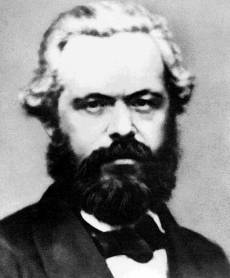
Marx breathes dialectics and revolution. For Marx, radicalism means going to the root, and Marx’s radicalism seeks to go to the root of capitalism, to comprehend its essence dialectically, to understand its inherent contradictions – and the seeds of revolution it contains.
The social reality he sees is not fixed and static, but charged with inner tensions and contradictions, which build up until they burst through the constraints of the present order to assume new forms, again with their own tensions, containing the seeds of yet further transformations. In capitalist society, he writes, “All fixed, fast frozen relations, with their train of ancient and venerable prejudices and opinions, are swept away, all new-formed ones become antiquated before they can ossify. All that is solid melts into air, all that is holy is profaned.”
Marx comes to socialism, unlike his predecessors, not by drawing up blueprints for imaginary utopias, but through his involvement in the real struggle for democracy.
Here is the heart of his politics: there can be no democracy without socialism, and no socialism without democracy.
He starts to study economics, not because of theoretical preconceptions, but because, as a radical journalist, he is trying to better understand the oppression of the poor peasants whose struggles he is striving to bring to public attention.
Marx never constructs a finished system: on the contrary, he struggles to finish anything he writes because there is always more to learn, always further complexities to study and analyze. He hopes to finish the manuscript that becomes “Capital” in a few months; twenty-four years later, it remains only partially completed, and his friend Friedrich Engels has to complete it after his death.
Marx is always deepening his analysis in response to events: from local struggles of weavers and the rural poor in Germany, to the resistance to British imperialism in India, to the struggle against slavery in the United States, to the Paris Commune, to the long campaign to win the eight-hour day.
He continuously adjusts his theories to the facts, not the facts to his theory. Exasperated by pedantic admirers who proclaim a “Marxist” orthodoxy, he growls “If anything is certain, it is that I myself am not a Marxist.”
His investigations bring him to an understanding of the class nature of society: how economic relations, relations of production, shape a society, including its state forms and ideology. He sees, too, that class struggle is inevitable, and that, further, it is the force that can transform societies.
Marx’s analysis shows that the contradictions of capitalism cannot be resolved: capitalism is a system of continuous crisis, capable of destroying the planet on which it feeds in its endless need to extract more profit, more surplus value, and accumulate more capital. Marx is clear about the danger capitalism poses to the earth: he writes angrily about the destruction it wreaks, and reminds us that we are “not the owners of the globe.” Far ahead of his time, he writes about the metabolic rift between human and nature that capitalism has brought about, a form of alienation which threatens to irreparably damage the ecology of the planet.
Marx’s ecological perspectives, and much of his other analysis, were not published in his lifetime. For many decades, all that even Marxists knew of Marx’s work was restricted to three volumes of his Selected Works, plus the three volumes of Capital. In recent years, work on his unpublished writings has been proceeding: the full collection of Marx and Engels’ collected works is now projected to encompass 125 volumes. A much fuller picture of Marx is emerging. For example, those who think of Marx as Eurocentric would be surprised at how carefully he studied Indigenous societies, and at his conclusion that the most democratic and free society to exist to date was that of the Haudenosaunee (Iroquois), even though he noted ways in which even it fell short.
Marx’s theory of crisis is not a theory that capitalism will simply collapse one day. He understands clearly that, for all of its contradictions, capitalism will not fall on its own: it needs to be overthrown. He is a revolutionary, not an economic determinist.
Marx believes that there exists a social majority – the working classes, the people who do the work of the society – who are capable of overthrowing capitalism and the capitalist state, and who in doing so can liberate themselves, and all of society. He believes that revolutionaries should engage themselves in the struggles that confront them where they live, but he is clear that finally a revolution that overthrows capitalism, a global system, must be an international revolution.
Marx is clear in his views, but practical in his politics. He throws himself into the work of the First International, which at the beginning is not even explicitly socialist, because he believes it is important to work with others who are engaged in struggle. He never tries to form a political party, and while he usually describes himself as a “communist”, he also at times calls himself a “socialist” or an “anarchist”, without troubling himself much about the terminology.
Running through everything he does is a profound and passionate belief in self-emancipation. He has no time for would-be dictators and saviours who want to bring ‘liberation’ from the outside. Liberation, for Marx, can only be self-liberation: the collective act of individuals working together to emancipate themselves. “Free association” is his watchword, both for the struggle and for the society that we hope to bring into being.
He knows that he won’t live to see that future communist society whose watchword will be “from each according to their ability, to each according to their need” but he devotes his entire life to bringing it about.
After Typhoon Haiyan: The true face of the capitalist state
November 11, 2013 - #
In times of disaster, the capitalist state shows its true face.
In the Philippines, in the aftermath of Typhoon Haiyan, thousands are dead, bodies lie uncollected in the streets, tens of thousands of homes and buildings have been destroyed, and survivors are without food, water, shelter, medical care, or essential supplies.
Meanwhile the police and the military are guarding stores “to prevent people from hauling off food, water” and other supplies (CBC report)
Stop. Let it sink in. Not only is the state failing to provide water and food, it is sending in its armed forces to prevent people from getting water and food.
A CBC report says that “an Associated Press reporter in the town said he saw around 400 special forces and soldiers patrolling downtown to guard against further chaos.”
“To guard against further chaos”. Chaos, from the perspective of the capitalist state, is people helping themselves to goods from stores in order to survive. Desperate survivors wandering among dead bodies in the street: that is not chaos. An government incapable of responding to a disaster: that is not chaos.
Rebecca Solnit has written about this in her marvellous book A Paradise Built in Hell: The Extraordinary Communities That Arise in Disaster.
Writing about Hurricane Katrina, she says
“the media focus was for a while on the retail outlets on dry ground reportedly being plundered. The hysteria about looting became so intense that two and a half days after the storm, on August 31 Nagin and Governor Kathleen Blanco called emergency responders – police and National Guard mostly – off search and rescue to focus on combating looting. They had chosen protecting property over saving lives. Put that way, the decision sounds bizarre, but the term looting itself is maddening to some minds, creating images of chaos, danger, and boundless savagery. What difference would it make if we were blasé about property and passionate about human life?”
...
“Looting is an inflammatory, inexact word that might be best excised from the English language. It pools together two very different activities. One might be called theft; the other requisitioning, the gathering of necessary goods in an emergency – think of the Salvation Army volunteers and affluent professionals breaking into drugstores in San Francisco during the 1906 earthquake to get medical supplies for the injured. Such circumstances, a choice of survival and aid over the rules of everyday life.”
...
“Survival required requisitioning. As the short-term emergency of the hurricane turned into a long week during which people were trapped in New Orleans, food, water, diapers, medicine, and more ran out and were replenished from stores. Left-wing media people forwarding e-mail images, and eventually Soledad O'Brien on CNN pointed out that news photographs of African Americans gathering necessities were titled looting, while whites doing the same thing “gathering supplies”. Opportunistic theft and burglary are, historically, rare in American disasters, rare enough that many disaster scholars consider it one of the “myths” of disaster. Some such opportunism happened in Katrina. The first thing worth saying about such theft is who cares if electronics are moving around without benefit of purchase when children's corpses are floating in filthy water and stranded grandmothers are dying of heat and dehydration?”
Keywords: Disasters – Hurricanes/Typhoons/Cyclones – Mutual Aid
Previous: Notebook 5 — Next: Notebook 7